
Custom Picture Framing vs. Ready-Made Frames: Is It Worth It?
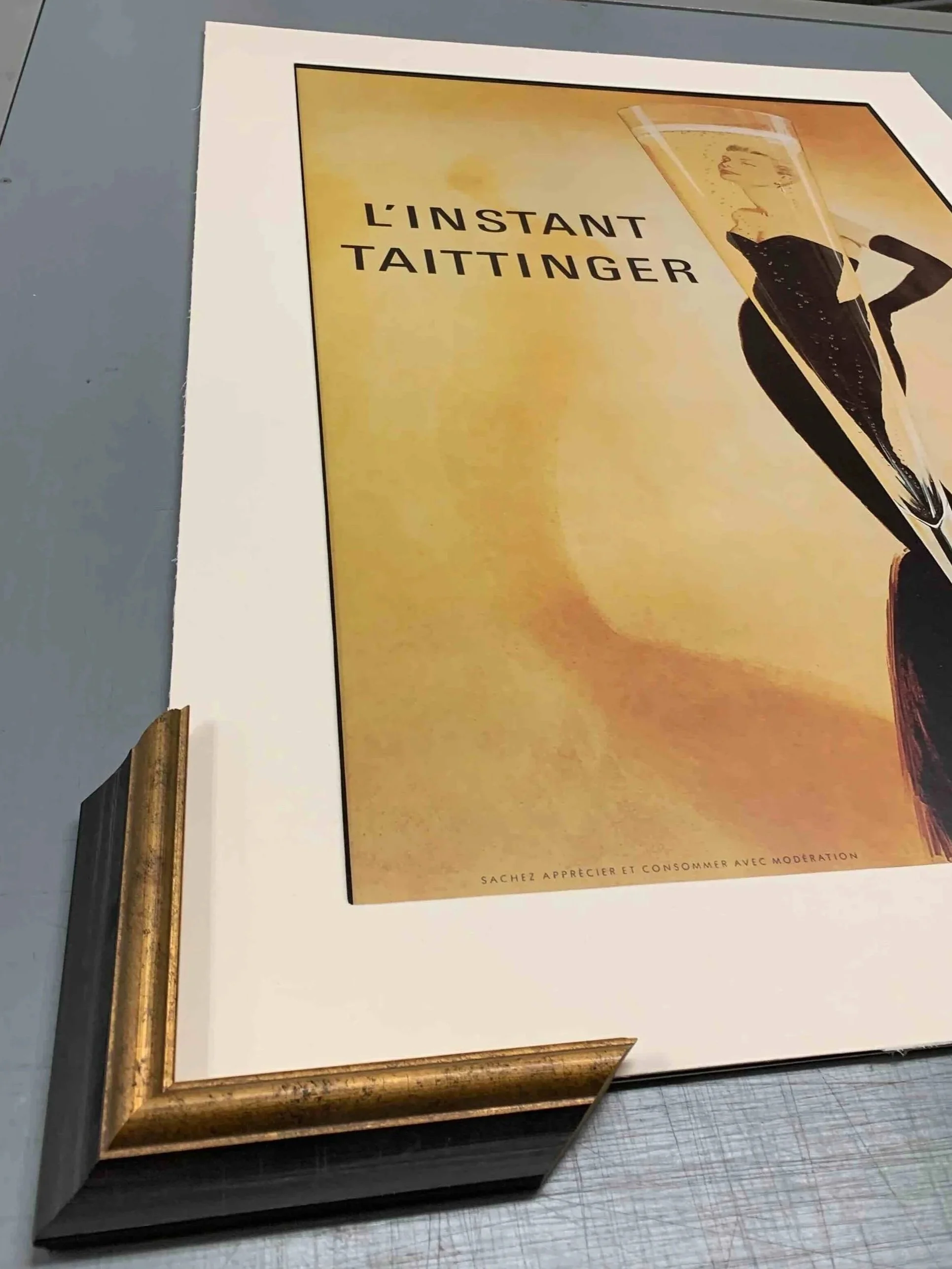
Think of the difference between a suit bought off the rack and one made by a tailor. Both clothe you. Only one was designed specifically for you. Picture framing works the same way — and the difference shows just as clearly on the wall.
Ready-made frames are inexpensive, available everywhere, and perfectly fine for plenty of situations. But when you're framing something that matters — a wedding photo, an original painting, a piece of memorabilia — a ready-made frame is often the wrong tool. Here's why, and how to decide which option fits your situation.
What You're Actually Comparing
Ready-made frames are mass-produced in standard sizes: 8×10, 11×14, 16×20, 18×24. They're designed to accommodate the most common print dimensions and appeal to the broadest possible audience — which is exactly why they tend not to complement any artwork in particular.
Custom framing builds everything around the specific piece. The frame moulding, matting, glass type, mounting method, and backing materials are all chosen to protect and present that one item. Nothing is generic by default.
Appearance: A Frame Should Enhance, Not Just Enclose
A frame isn't a container. It's part of how the artwork is experienced.
Ready-made, store-bought frames are intentionally neutral. That neutrality means they rarely detract from a piece — but they rarely elevate it either. Custom framing starts from the artwork itself: its colors, scale, style, and where it will hang. The result is a presentation that feels intentional rather than incidental.
In practice, a well-chosen frame can make colors read richer, improve visual balance, and draw attention to details that might otherwise go unnoticed. The artwork doesn't change — but how people respond to it does.
Design Options That Ready-Made Frames Simply Don't Offer
Beyond aesthetics, custom framing opens up a range of presentation techniques that don't exist in the ready-made world:
Double matting adds depth and visual layering, using multiple mat colors to draw the eye into the artwork and create a more polished, finished look
Floater frames mount the artwork so it appears to float within the frame, with visible space around all edges — a popular choice for canvas paintings and photographs printed on rigid substrates
Float mounting suspends paper-based artwork so the edges remain visible, giving it a gallery-style presentation without covering any of the image
Spacers create a gap between the glazing and the artwork's surface, which is both a preservation requirement for certain media and a design feature that adds dimensionality
None of these are available off the shelf. They're design decisions made in conversation with a professional framer who understands both the technical requirements and the visual possibilities — and they're often what separates a frame job that looks good from one that looks exceptional.
Fit: Most Artwork Isn't a Standard Size
This is one of the most practical arguments for custom framing, and one of the easiest to overlook.
Original paintings, fine art prints, vintage posters, needlework, children's artwork, jerseys, diplomas, memorabilia — almost none of it is created in standard dimensions. When a piece doesn't fit a ready-made frame, the usual workarounds (oversized mats, awkward borders, trimmed edges) all compromise the final presentation.
Custom framing eliminates that problem entirely. The frame and mat are sized for the piece, not the other way around.
Protection: Where the Real Cost Difference Lives
This is where choosing the wrong frame can become expensive.
Many store-bought frames use materials that aren't designed for long-term preservation. Over time, acidic mats and backing boards migrate into paper-based artwork, causing yellowing, staining, and brittleness. The damage develops slowly — often invisibly — and by the time it's visible, it's usually permanent.
UV exposure compounds the problem. Sunlight and interior lighting gradually fade colors, weaken paper fibers, and reduce contrast. Most ready-made frames offer little or no UV filtering.
Custom framers use archival-quality, acid-free materials and UV-filtering glass specifically chosen to protect against these risks. For anything irreplaceable — an original, a signed piece, a family photograph — that protection matters far more than the upfront price difference.
Some Projects Require It
Certain items can't be framed well any other way:
Sports jerseys and textiles need custom mounting to prevent stretching and fiber damage
Medals, coins, and three-dimensional objects require shadow boxes with appropriate depth and support
Valuable artwork deserves preservation methods designed to maintain both condition and value
Oversized or irregularly shaped pieces simply don't fit standard frames
For these, custom framing isn't a luxury — it's the only approach that works.
The Honest Cost Comparison
Ready-made, store-bought frames typically run $20–$80 depending on size and quality. Custom framing generally starts around $150–$200 and goes up from there — the final cost depends on the size of the piece, the materials selected, and the design choices involved.
That gap is real. But the relevant question isn't just what does the frame cost — it's what does the frame cost relative to what it's protecting and how long you plan to keep it.
Many people buy an inexpensive frame, live with a presentation that never quite looks right, and eventually replace it. Investing once in framing that's designed for the piece tends to hold up better — in both appearance and protection — over the long run.
When Ready-Made Makes Sense
Ready-made frames are a reasonable choice for:
Temporary or seasonal displays
Mass-produced posters and prints
Dorm rooms, children's rooms, or spaces where decor changes frequently
Artwork with minimal sentimental or monetary value
Budget-constrained projects where impermanence is acceptable
There's no reason to over-invest in framing that doesn't need to last.
When Custom Framing Is Worth It
Custom framing is the right choice when a piece is valuable, irreplaceable, or simply meant to last. That includes:
Wedding and family photographs
Original artwork and fine art prints
Signed memorabilia and collectibles
Vintage posters and historical documents
Diplomas, certificates, and commissions
Textiles, jerseys, and three-dimensional objects
These are pieces you'll likely live with for decades. They deserve framing designed around them.
Ready to Frame Something?
If you have a piece you're ready to frame — or one you've been putting off because you weren't sure it was worth the investment — we'd be glad to help you think through the options. Contact us to schedule a consultation, or stop by our Palo Alto studio to see our materials in person. We're open Monday through Saturday, 10am to 3pm.